
You finish your workout feeling good.
You go home.
Have dinner.
Go to bed.
Then the next morning arrives.
You get out of bed and suddenly think:
“Oh. There it is.”
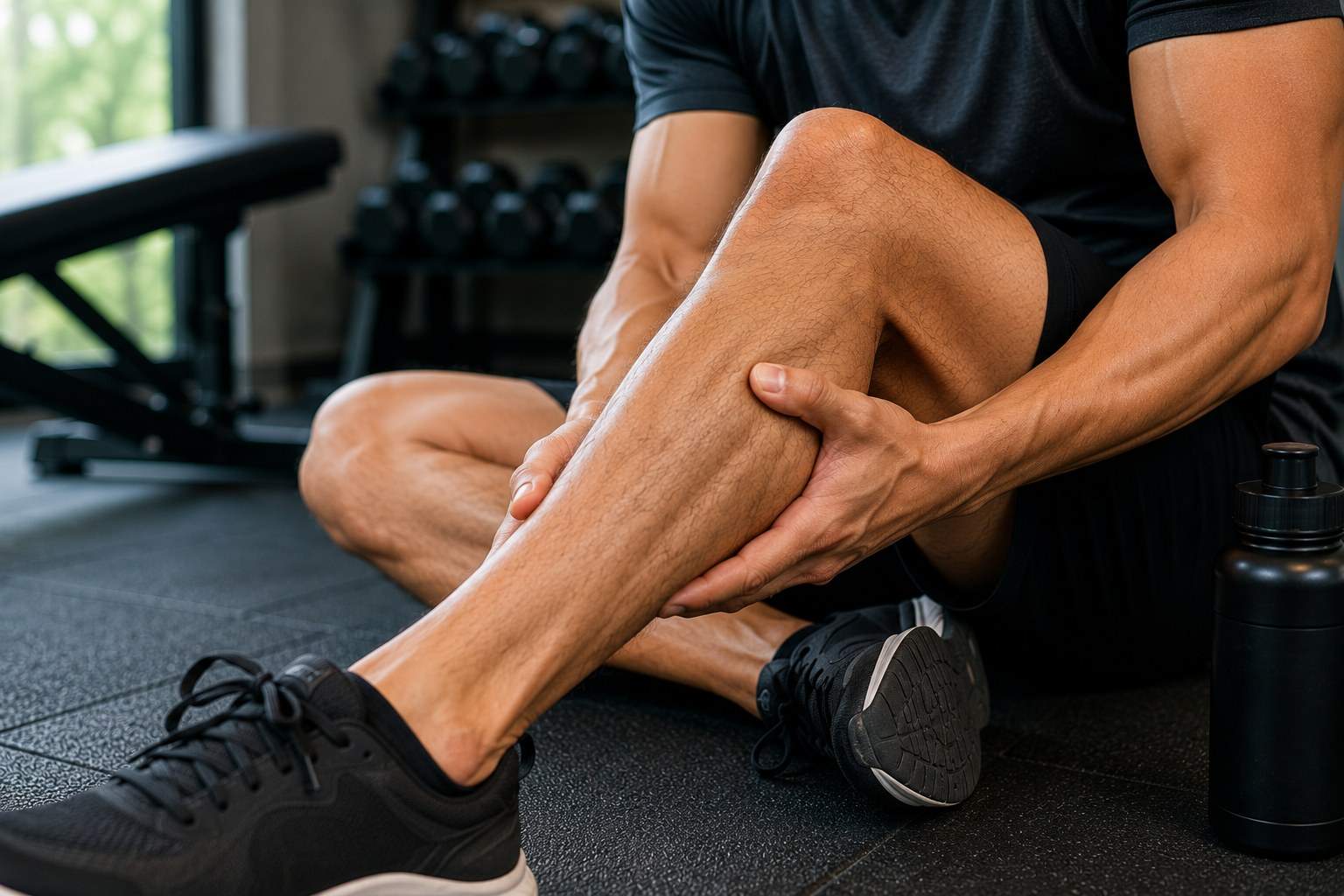
Your legs feel sore walking downstairs.
Your arms remind you about yesterday’s weights session.
Or sitting down becomes a surprisingly deliberate process after leg day.
At Tara Massage Therapy in Perth, active clients often talk to us about how their bodies feel after training.
And one thing that can be confusing is timing.
Why can you feel fine immediately after exercise but noticeably sorer the following day?
Why Are My Muscles Sore the Day After Exercise? Understanding DOMS
Muscle soreness doesn’t always appear immediately after a workout.
After unfamiliar or demanding exercise, some people notice soreness developing later — often referred to as delayed onset muscle soreness (DOMS).
You may particularly notice it after doing something your body isn’t accustomed to.
Maybe you increased your weights.
Ran further than usual.
Returned to the gym after a break.
Tried a new class.
Or simply used your muscles differently from normal.
That’s why looking at what changed can sometimes be more useful than immediately assuming something went wrong.
Why Didn’t I Feel Sore Straight After My Workout?
This is the part that catches people out.
You can finish training feeling completely normal and only notice the soreness later.
That’s why the morning after a workout sometimes comes with a surprise.
Yesterday:
“That wasn’t too bad.”
Today:
“Why are stairs suddenly my enemy?”
This delayed soreness is commonly associated with DOMS, particularly after unfamiliar or demanding activity.
The important distinction is that ordinary post-exercise soreness can develop differently from sudden pain experienced during an activity.
If something felt sharp, severe or unusual while you were exercising, that’s a different situation from simply waking up with the familiar soreness you sometimes notice after a demanding workout.
Does Being More Sore Mean You Had a Better Workout?
Not necessarily.
This is an easy trap to fall into.
You have a workout.
You’re incredibly sore afterwards.
So you think:
“That must have been a really good session.”
Then another workout leaves you barely sore at all and suddenly it feels as though you didn’t work hard enough.
Soreness isn’t a simple scorecard for the quality of your training.
How your body feels afterwards can vary depending on what you did, how familiar the activity was and what else has been happening around your training.
You don’t need to chase soreness to prove that exercise “worked”.
Why Can a New Exercise Make You Feel So Sore?
Your body likes familiarity.
If you’ve been doing similar exercises regularly, those movements are no longer particularly surprising.
Then you change something.
New exercise.
Different load.
Different distance.
Different class.
Different movement.
Suddenly you’re asking your body to do something it hasn’t been doing regularly.
Sometimes even a relatively small change is enough for you to notice a difference afterwards.
We’ve heard clients say:
“But I didn’t even train that hard.”
Then they mention that it was their first session back in several weeks.
That little detail changes the context considerably.
Tight Muscles and Sore Muscles Aren’t Always the Same Thing
People often use these words interchangeably.
Tight.
Sore.
Stiff.
Tired.
But they don’t necessarily describe exactly the same sensation.
Someone may feel tight without being particularly sore.
Another person may feel tender after exercise but not describe themselves as tight at all.
This is one reason we ask clients what they mean when they tell us:
“My muscles feel terrible after the gym.”
Where?
When did it start?
What does it actually feel like?
What did you train?
Those details give us a much clearer picture than the word “tight” alone.
If tightness rather than soreness is what you tend to notice after training, read Why Do Your Muscles Feel Tight After Exercise?
Should You Stretch Sore Muscles After Exercise?
It’s understandable to want to stretch when your muscles feel stiff or sore after exercise.
Gentle movement or stretching may feel comfortable for some people.
But you don’t need to force a painful stretch simply because you’re sore.
This is where listening to how the movement actually feels becomes useful.
More isn’t automatically better.
Stretching harder doesn’t necessarily mean you’re recovering better.
We’ve explored this broader idea in Why Stretching Alone Isn’t Fixing Your Pain.
Can Massage Help With Post-Workout Muscle Soreness?
Some people choose massage as part of their general exercise and recovery routine.
For us, that doesn’t mean promising that massage will magically “repair” yesterday’s workout.
When someone comes to Tara after training, we want to know how they’re feeling first.
Was it a normal workout?
Did they recently change their training?
Are the muscles simply feeling tired or sore?
Or did something happen during the exercise that doesn’t feel normal?
That conversation helps the therapist decide whether massage is appropriate and what type of pressure may feel suitable.
Massage may help some people with relaxation, muscular tension and general mobility, but it shouldn’t replace appropriate medical assessment when symptoms suggest an injury or something more than normal post-exercise soreness.
For people who regularly train, run or play sport, you can also explore our Sports Massage service as part of your general training and recovery routine.
Do Sore Muscles Need a Deep Tissue Massage?
Not automatically.
In fact, this is another good example of why:
More pressure ≠ better massage.
If your muscles already feel particularly tender after exercise, extremely firm pressure may not be what you want.
Other people may prefer firmer treatment once they’re feeling comfortable.
The important thing is communication.
Tell your therapist what you’ve been doing.
Tell them how your muscles feel.
And tell them if the pressure needs adjusting.
If you generally prefer firmer massage focused on muscular tension, you can explore our Deep Tissue Massage in Perth.
What About Massage and Stretching Together?
They don’t necessarily need to compete.
Stretching is something you can incorporate into your own movement routine.
Massage provides a different experience where you can relax while a therapist works with areas of muscular tension.
Neither needs to be presented as the universal answer to every sore or tight muscle.
We compare the two approaches more closely in Stretching vs Massage: What’s Better When Your Muscles Feel Tight?
What We’ve Noticed From Active Perth Clients
One of the most common things we’ve noticed is that people can become very focused on what they think they should be doing after exercise.
“Should I stretch more?”
“Do I need deep tissue?”
“Should I train again tomorrow?”
Sometimes it’s useful to start with a much simpler question:
“How does this actually feel?”
Normal post-workout soreness is one thing.
Something sharp, severe, worsening or completely different from what you usually experience deserves more attention.
Knowing the difference matters more than automatically reaching for the same recovery routine every time.
Frequently Asked Questions
Why am I more sore the second day after exercise?
Post-exercise muscle soreness, including DOMS, can develop after a delay rather than appearing immediately. How noticeable it becomes can vary depending on the exercise, how demanding or unfamiliar it was and the individual.
Is it normal to be sore after working out?
Some muscle soreness can occur after exercise, particularly after unfamiliar or demanding activity. Severe, unusual or worsening symptoms shouldn’t automatically be assumed to be normal workout soreness.
Does soreness mean my workout was effective?
Not necessarily. The amount of soreness you experience isn’t a simple measure of whether a workout was effective.
Can massage help with DOMS or sore muscles after exercise?
Some people include massage in their general recovery routine. How appropriate it feels can depend on the person, the amount of soreness and whether what they’re experiencing appears consistent with ordinary post-exercise discomfort.
When should muscle soreness be checked?
Severe or worsening pain, significant swelling, weakness, inability to use the area normally, symptoms following a clear injury or anything substantially different from your usual post-workout soreness should be assessed by an appropriate healthcare professional.
When Yesterday’s Workout Shows Up Today
Sometimes your workout doesn’t properly introduce itself until the next morning.
And suddenly the stairs remind you exactly what you trained yesterday.
If your muscles simply feel tired after an active week, giving your body some downtime can be part of looking after yourself too.
At Tara Massage Therapy, our therapists take time to understand what you’ve been doing, what you’ve been experiencing and what you’re looking for from your massage before treatment begins.
You can explore our massage treatments to see the different massage styles available.
Ready to give those tired muscles some downtime?